My photo
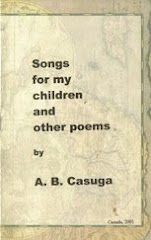
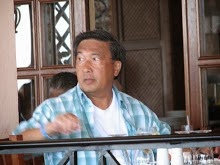
ALBERT B. CASUGA, a Philippine-born writer, lives in Mississauga, Ontario, Canada, where he continues to write poetry, fiction, and criticism after his retirement from teaching and serving as an elected member of his region's school board. He was nominated to the Mississauga Arts Council Literary Awards in 2007. A graduate of the Royal and Pontifical University of St. Thomas (now University of Santo Tomas, Manila. Literature and English, magna cum laude), he taught English and Literature (Criticism, Theory, and Creative Writing) at the Philippines' De La Salle University and San Beda College. He has authored books of poetry, short stories, literary theory and criticism. He has won awards for his works in Canada, the U.S.A., and the Philippines. His latest work, A Theory of Echoes and Other Poems was published February 2009 by the University of Santo Tomas Publishing House. His fiction and poetry were published by online literary journals Asia Writes and Coastal Poems recently. He was a Fellow at the 1972 Silliman University Writers Workshop, Philippines. As a journalist, he worked with the United Press International and wrote an art column for the defunct Philippines Herald.

Wednesday, April 15, 2009

AFTER APOLLO, ARE MOON POEMS EXTINCT?

Where were you when Man landed on the Moon?

I was on a midnight train going home to my family in San Fernando, La Union, after a week of frustrating academic work in the Manila school where I taught Literature. The beast of a train rattling on tracks built during the Japanese Occupation (40s) kept me awake and wild-eyed. It did not help that I could smell my beer breath when I sighed worrying about the day's excitement.

Will the moon landing by the American astronauts intensify the Cold War? was an urgent question for humanity. But I had another question in mind: Will this moon landing mean the demise of romance and mystery attached to the moon?
Will the rocky and barren surface of the moon vitiate forever its magic which has been celebrated in poetry and songs for centuries? Will the moon remain as the principal image of serenades? Of love?

As the train hurtled through the darkness punctuated by the scarce lamp-post lights lining the tracks, I could hear Sinatra croon to the Rachmaninoff melody:

Full moon and empty arms,
The moon is there
For us to share,
But where are you?
Dawn peeked through the Ilocos Sierras in the east, and I absently growled:
It is the East, and Juliet is the Sun,
Arise fair Sun, and kill the envious moon!
I must have rudely roused the passenger next to me, he staggered to another seat and threw me a dagger-look. This did not stop me from thinking that the Bard's Romeo and Juliet and the moon live on in the broadway and movie hit, The West Side Story's lyrics:
O moon, burn bright
And make this endless day
Endless night -- Tonight!
What will happen to moonlight serenades like that sang by actor Edmund Purdum in the movie "The Student Prince"?
Overhead the moon is beaming,
White as blossoms on the bough.
Nothing is heard but the song of a bird,
Filling all the air with dreams...
Could this beauty last forever,
I would ask for nothing more.
Believe me!
And the Blue Moon that every crooner from Crosby to Philippine balladeer Bert Nievera sang to make the ladies swoon? How blue will it be now that the spacemen have seen red rocks instead of azul?
Blue Moon, you saw me standing alone,
Without a dream in my heart,
Without a love of my own!
How would every lovelorn swain sing now about the Moon bringing back a summer love?
Though the night is dark and drear',
It seems, I see the Autumn Moon above,
And I pray one day, it will come,
And bring back my Summer love!
Those songs and poems with a lot of moons in the hundreds of Philippine languages and dialects, will they bespeak the love lost and regained? Will they be less effective as serenades for the inamorata on the window sill?
The standard Ilocano song has the moon as its central image as an objective correlative of the pursued loved one:
O naraniag nga bulan,
Un-unnoyko indengam!*
(O, bright moon,
Listen to my plea!)
And Moonriver? Will it still be wider than a mile? And the song of the pampas, Argentina's "moonlight and music and orchids and wine/ I am going stay down Argentina way!"?
But great though the American achievement must be, life will go on. How is the world reacting? I resolved to finish what I started in my empty classroom. Write a poem to remember a dying by.
What is the fuss all about?
Reactions: Apollo on the Moon

21 July 1969 A.D. (4:18 a.m., Manila). Man on the Moon !
-- A diary entry.

1. The Wife

Coffee boils the morning’s surprise away,
the children in bed. There is a new
neighbour outside gawking into some sky.
No new blueness here but talks true
to yesterday’s predictions. Today the earth,
tomorrow the moon. The eggs fry so slowly.
Do they mean it all, this morning’s mirth?
They will be late for school. Clocks gravely
Gravely rule even the grace of toast and tea.
“Tea, Sir? Tea, Madame?” O, the telephone.

(I miss you, sweetheart. I miss you. Really?
Are you coming home this weekend?
The moon?. Rocks? O yes, rocks. Tone?
No, no, darling. I’m sorry. An errand
This time of the morning? The Boss? But
The children. O, no classes? I forgot.
You’re not coming for the weekend? But…
All right, darling. Bye. Take care.)

CLICK.

I did not ask him: If I asked for the moon,
Would he have taken it for me? UGH!
After the rocks, and many rocks after…
How gravely, gravely clocks measure
Even the solace left from tea and sympathy.
Where did I put the cheese?


2. Nexus – Eden

Was it rock brought you back from Eden, Cain?
(The moon is a rock; rocks are purplish.)
Your rock is purplish, son. See you Abel, your brother?
(Whites are aboard the Apollo. – For Negroes only.)
Silence.

(“We hope to spread the message from the
Sea of Tranquility…We shall try to work for
Peace and tranquility for all mankind.”)

Am I my brother’s keeper?


3. Manila Broadcast/Vatican/Time Magazine

The moon is a vast Rock punctured by craters.
(Tu es Petrus!)
The littlest rock is about two feet and a half.
(Upon this Rock, Peter, I shall build my Church.)
All about us are rocks; it looks like a dead planet.
(God is dead.)
Dread is the Rock here come so soon
Hushing the throaty crow -- from rock to Rock
A full circle here.


4. Barbershop/San Fernando, La Union

Kas’toy dagiti sarita a mangisubli
Iti bileg ken turay daytoy babai;
Sanikuana toy lubong, kunkunada pay,
Abak nat’ lalaki a patay-patay.
Kayatna a saw-en ngarud, gayyem,
Daytoy ti leksiyon nga inka adalen:
Saan nga gandat toy lalaki
Nga maala ti bulan tapno ni babai
In-na panawan ditoy daga a sileled-daang.
Masapul ngamin ni babai ni lalaki
Tapno daytoy Im-nas lumasbang*

*Translated from the Ilocano dialect.

(It is tales like this restore
To female principle its primacy;
Earth’s dominion not in store
As man’s insignia of ascendancy.
The homily, dear friend,
Is in the homespun teasing;
Surely it is neither man’s end
To gain the moon while leaving
Earth to his lass a-grieving
For she’s perfect only with man
Alive and living.)

(This was one of the Early Poems included in A Theory of Echoes and Other Poems which first appeared in Still Points (Selected Poems), 1972.
Are love songs and poems still enamoured with the Moon as Central Image? Poet Francisco R. Albano is a faithful believer. Yes, we must still swear by the moon. He has written his own reactions which you might want to check out in his blog: http://calamagui.livejournal.com/15250.html.
The moon is there for us to share.

Monday, April 13, 2009

LOVE POEMS, DIFFICULT POEMS

Most poems are difficult to write. Jejune poems masquerading as poetry take the form of mawkish gushes of badly articulated emotion. Those are easy to write.
Yoke conceits and oxymorons together, and one might end up with :"Those were pearls that were her eyes/and rainbow lips that hide the diamonds/that glisten when caverns of breath open in mirth/or dearth of which betray a dottage that lies/about life and dreams and age and almonds/strewn on rocking chairs that once were thrones of birth."

Try drawing a face with those attributes and weep. Not beauty there but one grotesque visage worthy of some Elizabethan fairy queen caught in laughter that transforms her to a decrepit hag who has lost her teeth like almonds scattered on her dying throne, a rocking chair. Arrghh!


Love poems are the most difficult to write. Romance in those sonnets of Elizabeth Barrett-Browning could easily become bathos in the hands of a tyro: "I love thee with the smiles, tears, of all my life/ but if God choose, I shall but love thee better after Death."

There are other love poems that speak of pain and longing, of regret and fear, of failure to sustain the happiness that one must give to loved ones, like children who are left to cry themselves to sleep, forever hoping their absentee parents would soon come home with the day's surprises and goodies to reward good little boys and girls. Night falls. Father has not come home. Mother has gone elsewhere in pursuit of her own dreams.

What an unadulteratedly happy reception I got the other day from my grandchild Chloe Dominique. As soon as she saw me walking toward her, she dropped her toys, abandoned her playmates on the cul de sac, and ran to me screaming: My 'Lolo! My 'Lolo!

That angelic smile, that innocent mirth, those joyful sounds unarrested in her throat! One must dig deep into the old languages of love to speak about this fullness of heart. Aieee, tesoro mio! Que linda, mi dulce angelita!

Almost seven decades ago, I was that running child, tearing at the wind with all my might, racing my cousins, barefeet and all, toward the old man with the walking cane. We espied our abuelo from a distance. The light-haired gentleman, walking tall toward us, had an ear-to-ear smile. We were going to dip our fingers and little hands into his trouser pockets for those coins he always prepared for this ritual. The fastest cousin would get the most. I was the littlest one. I would always be the last pair of hands that would hug his legs. The coins would be gone, the vultures having grabbed them all ahead of me. I would smile sheepishly while panting in that familiar asthmatic wheeze that I must have inherited from this grand old man. I would always try to stifle a sob. He would know.

Don Alejandro Flores Casuga, Superintendente del Mercado Municipal, homecoming abuelo with the silver coins in his pockets, would shush my incipient sob away, pick me up in his strong arms, as I did my running Chloe seven decades later, and took my little hand and guided it to dip into his vest pocket. At the end of the race, I always had the most pesetas. The last shall be first, is still Gospel truth for me in the twilight of my years.

When I lifted my Chloe up into the air, even her little Canadian friends chorused in glee: Lolo! Lolo! Their solicitous mother apologized. "I hope you don't mind them calling you Lolo, too! "

But what if the Father comes home late, and the children are waiting in their darkened rooms? Where would the day's endearments be? What about the promised candies, the goodies for a long wait? What if there is a late father, and a mother who was no longer there? Divorces be damned!

The love would still be there. It is a difficult poem to write for the father with "bag of music and a pack of metaphors." Here is that love poem that was truly difficult to write.


Something about Picking up Ragdolls

Ahora, como estas haciendo con mis nietas y nieto mientras su mujer desgraciada esta viviendo una vida loca? Aiee, santisima, hijo. Ven aqui. Regresas a San Fernando, para puedo ayudarte con sus ninas y unico hijo.
--Letter from Home


Something about picking up ragdolls and cans
graffitied on one’s conscience in silent rooms
built to peek slowly into coincides with the loss
of verb in one’s speech: no amity here between
this ministry and that menagerie.

Evening brings a pack of censure for the father
who, leaving, pledged the carnage of the baker’s
best and Andersen’s hoary hairy fairy tales,
arriving plods through debris of waiting --
(arm-less d-o-l-l-s, paperrrrripped dolls,
paper ships, paper planes, paper hats, paper…),
forgetting, now mournfully remembers:
“Candy stores are closed along the way home.”

Silent rooms are built to peek slowly into
because fathers have given up looking
into daughters’ eyes form tears, arguing
the relevance of waiting when all the piper has
is a paper bag of music and a pack of metaphors.
(“You know, only children recall the Deluge?”)
The evening sees the piper leading the (mass)
mice and piper (pauper) drowning.

Fathers plod through debris of waiting
and have learned in turn to pray.


-- ALBERT B. CASUGA
(First published in the Sunday Times Magazine in 1970. A Theory of Echoes and Other Poems, 2009, UST Publishing)

Sunday, April 12, 2009

LOS INDIOS BRAVOS

A THEORY OF ECHOES
AND OTHER POEMS
CULTURE AND HISTORY

LOS INDIOS BRAVOS


Los Indios Bravos. Poet Virginia Moreno, better known as the sister of Pitoy Moreno the haute couturier, built this bar and grill on Mabini St. Now long gone, it was the refuge of artists of all shapes and sizes (of ego, pretensions, eccentricities, biases, insanities, constipations, vituperations, loyalties, debts, pieties, ad nauseam).

It did not take long for the canto (street corner) boys to realize that that was not their lugar (hang out). This was the watering hole of celebrity-hound Nestor Torre, poets Wilfredo Pascua Sanchez, Erwin Castillo, Jolico Cuadra, Franklin Osorio, Jose Lacaba, Marra Lanot, Cesar Mella, and occasionally visiting Dumaguete City (Silliman U) writers: Cesar Aquino, Merlie Alunan, Myrna Pena-Reyes. For the love of God, these tagay-guys (read that gin guzzling) will never understand the crazy conversations of these subdued people who become noisy and nosey after the second bottle of pilsen. This was the space for the dwindling Ermita ilustrados or just the ilustrado-manque.

Then Philippine Social Security System chairman Adrian E. Cristobal, artist and a sneering patron of hungry and penniless writers (he would call them Oy, Camote, but he would buy them drinks and lunch or dinner anyway. He had, like Joaquin, weird terms of endearment.) They had a thing in common, though; they always maintained caballerismo toward all (yes, all) ladies. Both stood up chivalrously when introduced to women. Adrian, a clothes horse, always looked good in the latest men’s fashion. Joaquin , however, was partial to khaki pants and printed shirts (pre-war – WWII -- vintage).

Newsmen (Julie Yap Daza, Ruben Alabastro, Jose Burgos, Cesar Aguila, Rosauro Acosta come to mind) dropped by after their binges at the National Press Club, or the Manila Overseas Press Club, perhaps to find out who is running off with whose wife or husband or has come out of the closet; and maybe who is plotting a revolution or some such delusion.

Historian and nationalist Renato O. Constantino would sip his sherry there, and leave with undisguised contumely when he gets into jaw-tightening arguments with Joaquin on the historical legacies of Spanish or American colonizers. You owe the Spaniards the guisado, one would say. They corrupted the Filipino mind, the other would retort. The Yankee cuckolded us on the Bay when they stole our triumph over the Spaniards. Yes, the anti-Imperialist (Spanish or American) would agree. I’m gone, the other would say. Adrian Cristobal would play referee by offering to buy them drinks. Both refused.

The late Nick Joaquin was high priest there. He had his own table abutting the corner (two chairs, no more) where he could easily holler Cerveza!

One time or the other, he grilled me over an article I wrote in the Philippines Herald on how the American Armada led by Admiral Dewey denied the Philippine revolutionaries their victory over the Spanish colonizers by not allowing President Aguinaldo and his minions to enter Manila in triumph after the Americans helped destroy the Spanish fleet at the Manila Bay. Dewey feigned a mop-up operation. It was actually a take-over from the Spaniards who agreed to cede the Philippines for almost a million dollars to the Yankees (in the Treaty of Paris) who promptly became the new colonizers.

Damn Yankees, Joaquin roared; by golly, you took a left-turn from art criticism to historical revisionism! It was almost like a playful poke on the head.

The last time he thought he might slap me one at the back of my head was when I published Teresa Izon’s feature on him in my undergraduate student periodical (Journal of Arts and Sciences, UST, 60s). I asked Teresa, the daughter of the Philippine Free Press illustrator Esmeraldo Izon, to interview him for a feature article. She came back with an interview that no one would be given henceforth in the history of Philippine journalism. Teresa knew Nick personally through her father, the Philippines’ version of Norman Rockwell. We both treasured Joaquin’s The Woman Who Had Two Navels, a novel we studied in university.

Why almost a poke on the head? Teresa and I revealed his real name: Nicomedes.

That was also my last feature article at the Herald. My editor, Nestor Mata, lone survivor of the plane crash killing the late lamented President Ramon Magsaysay, thought I must be running out of artistic juices. So, never mind. The defunct Herald was partially owned by American nationals allied with the Sorianos and McMickings, owners.

For someone who favoured the Spanish language over the American, Joaquin mastered a lot of Thomasite idioms and Yankee colloquy. He growled and hectored me on that Fil-Am war. Did you know that the Philippine Revolutionary Government’s Secretary of War was done in by Filipinos themselves?

He wrote a definitive story on the Philippine-American war at the Philippines Free Press after that. When I read it, I decided to write an episode of that war on the betrayal of General Antonio Luna, who would himself be assassinated by the hotheads of General Emilio Aguinaldo. Tribal rivalries, political intrigues, political opportunism – 1900 stuff, but all too contemporary in the politics of this island republic. Joaquin said: Culture of small things.

Joaquin published separately one of the poems (Deathwish Kept: June 5, 1899, The Philippines Free Press) interlaced into what I would later collect under the title In a Sparrow’s Time. (Still Points, 1972, revised in In a Sparrow’s Time, 1990, Canada, and under the same title in my poetry collection A Theory of Echoes and Other Poems, 2009, UST Publishing).

As for Los Indios Bravos, my final sober attachment to that salon of artists was an oil painting I contributed to a three-man exhibit at De La Salle University (poet Cirilo F. Bautista, Albert B. Casuga, and Ricardo de Ungria, our student who wrote poetry and executed bright paintings a la Pollock. He is now Commissioner of Arts at the Cultural Centre, I am told. Of him, I remain to be truly proud. When I heard about the death of his son some time ago, I wept not knowing how I would have taken it if my only son, Albert Beau, had taken his own life inadvertently like Ricky’s boy.

In honour of Los Indios Bravos, Joaquin attributed in his Culture and History, (Anvil Publishing, 1988) the victories of the Philippine Revolutions against the Spanish and American colonizers to these Indios Bravos, the ilustrados like Jose Rizal, Marcelo del Pilar, and soldiers Alejandrino, Tinio, Gregorio del Pilar, Simeon Villa (father of poet Jose Garcia Villa), and Artemio Ricarte.

Also in honour of Los Indios Bravos, the heroes and the place, my oil painting was preserved in an exquisite frame by former De La Salle and art patron Prof. Nilda Servando Rotor, who paid me a princely sum to P100 when I quoted her the friendly price of P75. It was also the only painting I ever sold. The rest are probably in relative’s closets or places where they did not have to explain what the grotesqueries were all about. (Serendipitously, I find myself now an adjunct to the University of Toronto where Nilda finished her graduate studies years ago before his De La Salle sojourn.)

The painting was of an empty Los Indios Bravos (intimated by my sketch supra), much like the description of Hugo’s Les Miserable’s Salon de la Revolucion, “empty tables, empty chairs.”

Los Indios Bravos was a part of my brave new world. It is gone now. An apt epigraph to this ought to be: “I an old man, / a dull head among windy spaces.” (Gerontion, T.S. Eliot)


In a Sparrow’s Time

Poems on the Death of
General Antonio Luna y Novicio, Soldier

He is that fallen lance that lies as hurled.
-- Robert Frost


(In 1897, General Antonio Luna was exiled to Madrid. He had just denounced the Katipunan and some of his friends like José Rizal, Alejandrino, et al, out of anger. His Spanish captors told him – during the reign of terror that followed the discovery of the KKK – that he was betrayed by his compatriots. A year later, after studying military science in exile, he went back to the Philippines to volunteer his services to the Revolution against the Americans. He was subsequently appointed Director of War. His obsession for creating an effective and disciplined army and his desire to make up for his disavowal of the KKK, brought him untold frustration and, consequently, his death. On June 5, 1899, that fateful day of his assassination, Luna rode toward Cabanatuan, Nueva Ecija, responding to summons purportedly coming from President Emilio Aguinaldo. He was accompanied by Col. Paco Roman, Maj. Simeon Villa, and some 25 cavalrymen. Upon coming across a broken bridge on his way, the impatient General left his retinue behind and kept his date.)


Ω


1. Confession before a Broken Bridge

It is my grief pursues a habit of death,
The weight of a mountain rides me down.
But blood must be avenged – if blood it is
Would still the violence knotted in my gut.
If men should die at all, they must be pure:
The crag that breaks for them will be.
But these rocks, this grass, this brackish cove,
They shall not take me. I shall not even die.
Earth vomits the gall of its memories.
I am a memory bitter to the bite.
Forgive me.


2. The Exile

It was cold out there, Pepe, hermano querido.
Madrid, Barcelona, Catalan, Manila –
How could they ever be any different?
My anguish knew no country but death.
Your fall at sparrow’s time was as much as mine,
The bullet from my gun.
It is our passion devours us. Ourselves our war.

The Revolution was a bastard son, Rizal.
Denying it, I found myself becoming one.
Was it this fury we dreaded most?
Or was it the son we refused to father?
When born, we disdained to patronize?
Was it because it had the mother’s features?
Revolutions are by paps of ignorance mothered.


3. Luna Shall Overcome

His vile temper felled him.
--Diego Esquivel


1.
No, Senor Presidente. It is not in our habit
To be spat upon while offering our haunches
For rending and outrage! Faith must end
Beyond the whore’s bed and cuckolding on the Bay!
If Dewey had fooled us once, let us,
I demand of this Assembly, be the wrath of God
And cut the Yanqui balls asunder!

2.
What? Are they still yapping at Malolos?
Caloocan has fallen! Calumpit imperiled!
Send for Janolino to shore La Loma up!
Torres-Bugallon is dead. What?
Pedrong Kastila is sore in bed?
What sort of harlot had he?

3.
It is your kind, Tomás Mascárdo,
Deserves to be caponed!
The Macabebes have sold out to the Yanqui,
And here you are sucking nipples
For your breakfast!

4.
Paralysis. It must be this plagues our war.
Like castrated chicken, the Cabinet asks
For Yanqui armistice! Has Mabini gone limp, too,
In his head? We should never surrender
Our birthright to die free and unafraid!


5.
Remember this, Buencamino! I could have
Crushed your manhood bit by ugly bit
For begging my troops turn to maricones!
What? And leave them lap the Yanqui stool?
O, you small, weak men better born as rats!
Tell Schurmann, tell Mabini –
Luna shall overcome!


4. Deathwish Kept: June 5, 1899

There was one, Diego Esquivel, who witnessed the carnage.
-- Julio Villamor

Some afternoon dread becomes this heat
That singes the Convento where he fell.
On this branch should his rended arms be at,
On that flagstone should his plucked eyes tell
How blindly stared the blinded rage,
How soundlessly shut the windows there.
Was it some passion play on a barren stage?
Was it some cruel theatre of its audience bare?

Here, touch the crack slithers on this tree.
Your fingers should trace a slosh of brain,
Cold drip of sap now blood on cold machete.
The afternoon’s dread is an afternoon’s pain
Dulled the laughter caught in the horseman’s throat.
Was it vengeance sated, or was it Deathwish kept?
Was it fallen man cried helplessly: Assassins!

Or was it slayers fell where slain had spat:
ASSASSINS! ASSASSINS!


5. The Habit of Mountains: A Dirge

“It was his grief pursued the habit of mountains:
It moved the world with quietness. Quietness moved them.
No dearer madness there is than which he died for:
A will to perish in time and manner he chose.
It could not have been any kinder than this falling,
A manner of bargaining one’s way
Into a choice between a kind of dying and feeling dead –
No option for us who learn, too early perhaps,
That death prorogues a dream of fancy
Or a prayer of willing our pain stay
The ramrod poised to rend out days descending
Foglike upon us decreeing silence for our bed.”


-- ALBERT B. CASUGA, 2009

(Gemino H. Abad published the Still Points version of these poems. He includes a well-researched Notes on the Poems, pp. 527 etseq. in his A Habit of Shores: Filipino Poetry and Verse in English from 60's to the 90's.)

Wednesday, April 8, 2009

SIERRA MADRE POEMS BY JASON MONTANA


Somewhere in the Philippine Sierras.


That's how I would have slugged a story on a poet, academic, cleric, and friend who took to the hills when Martial Law was declared in the 70s in this island republic. Jason Montana has gone to the hills.


This illustrado has taken the cudgels for the massmen, the great unwashed, the lumpen proletariat. No surprise for us who saw him truncheoned by a rabid constabulary while peacefully demonstrating with a group of his students. "No! No!" One of his students yelled at the baton-wielding rogue in Jason's defence. "He is a priest!"


"Ahaaaa...press, hah? Press, hah? Walang press-press dito!" The murderous look on the constable's face belied his intentions to perhaps kill every mediaman around. His phonemes obviously precluded the presence of the religious in the streets. Priest! Press! Close. He must have come from the Visayan region or elsewhere where the long E sound (in priest) could easily metamorphose into the short E sound (in press). Either way, the Church and the Press be damned. This is Martial Law!


I would have scooped the AP, AFP, Reuters, et al , and United Press International (Manila) would have had the exclusive on some of the first patriots who planned to wage a Maoist revolution to start from the hills: the Sierras in the north, Mt. Mayon in the central region of Legaspi, Mt. Pinatubo in Zambales to the south, and Mt. Arayat in Pampanga, a stone's throw from the seat of Government in Manila. But UPI days were much, much earlier -- that was in another life, when I was a UPI graveyard shift desker and a Hemingway-manque.


The TV talking head announcing the declaration of Martial Law was a university classmate and friend to boot, then the Press Secretary of the martial law president. Before that, he was with the Agence France Presse. Ironic. On the opposite worlds of politics and revolution, I felt conflicted. The dramatic dilemma was palpably stark! I would have scooped either way.


I know Jason Montana differently. He knew the Filipino people would one day overcome. In the hills, he remained resolutely a freedom fighter. Even the death of a beloved (in a Pangasinan encounter) did not change that.


The People's Revolution came and went. Land Reform was neither here nor there. Nothing much has changed. Coming down from the hills during one of those military amnesties, Jason Montana remained unchastened. Has the people's revolution failed? Was it a fluke after all?


In one of these Sierra Madre poems, Montana sounds defeated, but unbowed. The fight for Justice in the name of God's most vulnerable children, the poor, the wounded, and the neglected masses, is a protracted war.


SIERRA MADRE DE LAGUNA
(February 12, 1992)


Home

Deep in the Sierra Madre de Laguna
One misses the spread of sunlight
Over lake and field and village.
The heart remembers green expanse
Of friendships of the common folk.
But the camaraderie of the NPA camp
Overwhelms. Each comrade radiates
Warmth of home. The Red Fighters
Are brother, sister, friend in the great
Service. How they lighten the burdens
Of the protracted people’s struggle!
Rain falls. It is mere slight discomfiture
Fine-tunes balance of body and mind.
Pang of hunger is food for the spirit
In mountain fastnesses.


Stars

The stars are out over the Laguna Sierra.
I envy the tree-tops close to heaven. But
Just a little. I settle for flickering fireflies
Near to hand, for foxfire spread royally
All over the forest floor, and hearthlight
Of the peasant folk, their huts aglow
With quiet forceful hope in the night
Of the protracted people’s war.


A Little Symphony for Sue

1.

A counsel to remember
Like a star caught among branches:
A human organization is the Party,
All woman, all man, all creation.
But in it and through it
One may find her humanness
And open up to a wide field
Of service to the people in a
Glorious historical revolution.
I have no proof of this
But this poem.


2.

When the Party of the revolution
Reached the Sierra Madre,
Comrade Sue followed,
And she was sworn in.
The stars swung above her,
The fireflies danced around,
And comrades ringed her with
Mabuhay! and the Internationale.
Would that she be always
As tall as aspirations for freedom.
Would that she be always
Deeply rooted among the people
Like this mountain range
Of a grand revolution.


3.

Because the Party oath-taking
Ceremony is a historic event
We conjured a grand celebration:
Formal wear for gentlemen and ladies,
A thousand guests and champagne –
But when the time came it was
Just ourselves, a small collective
With clear minds and real guns.
The bread we broke was ourselves,
Our music and poetry. No drink
But a generous takori of tea.
We claimed our mountain
With the red flag, an M-16
And a vase of purple flowers.
The campfire burned steadily
Like the heart of the revolution.
In the revolution was Comrade Sue
Newly sworn in as a Party member.
She warmed our hearts. Ours was
Probably a strange light in the forest.
Only the generator sounded drunk.


4.

The poet lies in bed
Composing a symphony for Sue
Into the Party newly welcomed.
He is lost in some forest
Of no-mind-mind until
Everything slowly disappears,
All but
S


POST


The people’s soldier is doubly alert.
Always. The forest stands guard with him.
The jazz of trees, concert of bird and beetle,
Rush of wind through leaves of mind
And a hundred warterflows composed
Welcome him as comrade in arms and music.
In the pattern of people’s war they connect.
Footfall of the enemy is clearly heard,
His shadow is unmistakable dissonance of silence.
At nightwatch the people’s soldier follows
The Way of Zen and Tao undefined.
He knows the terrain of revolution where
The Sierra is Madre.


SIERRA ABOVE THE PACIFIC

1.
When at a crucial turn
The resumed revolution
Failed to rise to higher
Quality,
Who would lead
Stopped to take stock.
We reviewed ten years
Of struggle
To discover we were astray
From the long road
To victory.
Who would lead
Followed insurrectionism as
A false messiah,
And military adventurism as
Avenging bullet in ricochet.
In our folly we mistook
Falling turrets for the
Keep of State.
Short and shallow were
The people’s phalanxes
Yet we dared assault
The enemy’s inner gates.
Black as sin is
The tragic flaw: mass base
And alliance networks
Sacrificed in a fatal gambit
In a desert field of
Line, beliefs and choices.
Seduced by illusion,
Who would lead
Would force the sun
To rise from darkness
Before its time.

2.
The years are winds
Heavy on grass.
The grass owns and consumes
The passing pain.
Now we travel out of
A dark night
Of collective soul,
And behold anew the earth
As keystone to the sky.
We are back on course
And the road is
Protracted people’s war.
The holding vision beckons
And the people are regained.
Mountains and saddles
Of truth and error,
Ravines of ambiguities
Are discerned. We open
To new affirmations
In a time for heroes
Shorn of hubris.
Who would lead
Appropriate decorum
Of mind, heart and sense
Before the many lives lost/
Maimed in the civil war.
In camps of Red fighters,
In freedom of forest deeps,
Mindsets explode and
Life-force is released.
Spillways of proletarian
Consciousness and care
Open to revitalize the land
And shoots of future.
Enough of anger,
Self-pity and regrets
Over missed opportunities
To advance
The line of march!
The task is to strike
Deep roots among the masses
To muster strength like of
Conquering daylights.
Balance is all,
In armed struggle and
Mass movement;
The united Front
In calculated control
Like the Sierra Madre
Poised above the Pacific,
Playing
Blue tango.


Jason Montana has come down from the hills. Did he succeed in untying the Gordian knot while up there among the clouds and the cracks and crags of the moutain bastions? Have the mountains offered him solace for unspeakable grief over kith and kin he has lost or found (his heart, I know, is a lonely hunter).


One thing is certain. He is truly of man of his God. Poetry, people, passion, and prayer. He is all that the last time I saw him buying books from a National Bookstore in Las Pinas City South Common Mall. Offered cerveza over lunch at the mall, he asked for tea. Just like the ritual around the campfires.


Hermano, he said, write me. Do not stop writing. Just write. Hence, this blog. He disappeared among the teeming mall people -- his beloved children of God.

PROTEST POEMS


The People's Revolution was heard around the world.


A coalition of the Church, Business, the Intelligentsia, Universities, and Religious orders (nuns, seminarians) stoked the anger of the impoverished proletarian living along the railroads, esteros, ghettos of the inner city, farms, the slums, and along the banks of Pasig River, and this curious aggrupation of protesters indicated their espousal of the massmen's plea for amelioration.


When the Movement astonishingly toppled the government of President Ferdinand Marcos who ironically refused to sic the army on the street demonstrators, the gawking world recalled: these were the same people who toppled the colonial rules of Spain (400 years) and America (on-going?).


And the books all around the world have been written -- but not one was written by any of the henchmen of Mr. Marcos. The late Adrian E. Cristobal, presidential spokesman, died with nary a
pip about what led to the toppling or in defence of Marcos. Then Press Secretary Francisco Tatad wrote a book on another deposed President, Joseph Estrada, (much later) but nothing on Marcos -- he was the principal speech writer of Marcos. Johnny Tuvera, a writer and Marcos' Presidential Assistant, died without writing about the longest ruling Philippine President. Presidential Executive Secretary Jacobo Clave, a journalist, was mum. Was this an admission that the People's Revolution was authentic and, therefore, justified as an expression of the sovereign will?


But the signs were there. Protest literature abounded.


Isagani Cruz, an academic and playwright, wrote Sakada, got it staged, and it rallied idealists behind the movement, not the least of whom were artists and his students. He asked me to write a song for the play. I obliged with the following -- my version of a "protest poem" which I wrote in Filipino without thinking of how I would write it in English (if I had to). It was my first Tagalog/Filipino poem, and even to this day, it defies translation, even my own. So, I reprint it here without translation -- may better poets translate the same at least for posterity (or even for the archives).


I wrote Death by the Bridge immediately after a slain student demonstrator was shown in the media clutching his red banner in one of the marches that preceded the People's Revolution. The late Alfredo N. Salanga, poet and editor, included the poem first published in the Sunday Times Magazine in a collection of protest literature long after the revolution had fizzled out.


Carousing at Hacienda Luisita


It is time to cut the canes at the hacienda.


“O sakada, O sakada!
Dampa ang simula, dampa ang hantungan
Ng iyo’t aking mga panaginip.
Pati kinagisnan nati’y api’t hirap!
Kamatayan na rin yata ang hangganan
Ng lakas mo’t aking paghihirap!

“O sakada! O sakada!
Ang ‘yong kahapon siya ring hinaharap:
Ubos na’ng lakas, ubos na’ng panaginip,
Dilim sa dampa nati’y kahalip.
Halakhak ang udyok ng asyenda,
Luha ng dukha, halinghing sa dampa!

“O sakada! O sakada!
Tag-ani na naman sa sakada!
Luntian ang bunga, silanga’y pula,
Umaga na rin kaya sa ating mga dampa?
Tag-ani na naman, kapatid sa lupa,
Aanihin din kaya ang ‘yong kalul’wa?

“O sakada! O sakada!
Ibuhos man nating kusa ang ating dugo,
Hahalakhak pa rin ang asendero!
Sa patalim na kaya ang ating umaga?
O sakada!”

If to kill were as easy as to sing…*
O sing on, drunken friend!
We will gather the cane tomorrow!

It is the hunger on brown wrinkles
lined in the irony of parched lips
parted in smile that convulses
the clot of flames violent in the blood
of these gnoméd comrades now
crouched in the muck of this burning river.
The anger was good while it lasted.

*Added to the revised version published in my A Theory of Echoes and Other Poems (UST Publishing House, 2009).


Thereafter, protest poems were the fad of the day. The students came back to Literature classes and asked their professors to comment on their ``protest poems``. I knew I succeeded in making them think that literature was useful , after all.


The following were poems I dedicated to poets Emmanuel Lacaba and Jason Montana -- authentic heroes of the revolution. Real patriots. Lacaba died fighting. Montana is still fighting.


Aftermath, 1976: Guerrero

For Emmanuel Lacaba, who died in combat, and Jason Montana who fights on.


Bivouac

Where blends the cane leaves with mist and rain
Blends the shadow and the movement,
Each defining courage from fear, fear from pain.

“It is the touch of skin or harsh point of crag
Makes the warrior brother to the rock,
It is crag offers the question between life and slug.”

The stillness between the lads numb with song
And rifles stocked shapes the crackle of campfire
Blending with rustle of grass and night stretched long

By the wordless grief of a valley’s muffled groan.
“Bless the valley’s darkness, brothers of song,
Its pall fallen on grey lips, its silence on a moan.”
The night’s benediction is a promise of dawn.


Song

Dawn is red on this ruddy face
Sun dogging his craggy trail,
The song deep in his throat:

“The last best fight, my brother;
Our blood on the tip of steel!”

Brother to the pulsing spring,
To the bushes and rocks, the wrath
Of days, of quietness descending.

“The last good fight, my brother;
Our blood on the open trail.”

A song arrested in his throat,
The steel tensile in grace,
His still point is a point of steel.

(First published in the Asia-Philippines Leader)


The People`s Revolution is still being written about by even the younger poets who were wee tots then. Some of the older poets have despaired somewhat. Jason Montana, who knows the crags and the rustle of grass and thicket and jungles, and bivouacs, has written about the post-revolution. More on that later.

Tuesday, April 7, 2009

EASTER POEMS BY FRANCISCO R. ALBANO


WORDFLESH

Speak O Risen Word
Your light everlasting
In darkness of the heart
And let Spirit rule the deeps
Of restless waters of soul
That new earth may rise –
An eden of holiness
Where you are seen and declared
Made flesh glorious
Extravagant and good


IN HOLY WEEK

His prayer abides
That we be gentleness of his ways
Of his hands breaking bread
Pouring wine of health and cheer

Gentleness of his silence
Of self-surrender to the Father
Wordless in Spirit that contains all
After words made pain in questions

Gentleness of his Light
Melting resistance of rock and wood
Dispelling doubts of faith
Dissolving nights of the heart

To appear in gardens of our lives
As radiance of the way it is
That we be for one another
In remembrance of him

(Philippine Graphic, April 24, 2000)


EASTER PLACES

Our truth,
Our way,
Our life,
Be always the Risen Lord.
The proof of his resurrection
Is not the empty tomb
But his living presence
Discovered in holy places:
Like gardens
Of order, seemliness & beauty,
Of person & community,
Of fellowship & celebration,
Where fears and doubts
Are allayed
& faith holds the center;
Like lake shores
Where fish & bread
Are enjoyed by friends.
The proof lies in experience
Of his touch
Of finger & spirit
Of his words burning in hearts
Of people on the road.
He emerges all Man all God
In dazzling light,
No longer from the tomb,
But from the brokenness of bread
Shared today
In the people’s struggle for
Justice of his favor.


PASCHAL CREDO

Between hosannas of earth and glories of heaven
Above shattered power of Sanhedrin and State
Above tribal loves and laws of the heart
So it is: his cross our cross lifted high/
Shared bread and wine/ body and blood/
Life and death/ God Man Woman in elevation
So it is: through palm fronds and olive branches
Via dolorosa memorial parks and paschal fiestas
From little Bethlehem to new Jerusalem
Genesis to Apocalypse of our lives redeemed
Mystery of Light to Light Face to Face
At once joyful sorrowful lightful glorious
So it is: because of him because of us
All Life is risen, good and triumphant all the way

(Philippine Graphic July 19, 2004}


Francisco R. Albano served Mass at our Las Pinas City home before we left for Canada, before he left to fight for the people, God's children; he is a poet, priest, and warrior of the Risen Christ in the purest sense of the word -- he will fight for His battles wherever injustice against His children rears it ugly head.

Paco, now a seminary rector in the Northern Phiippines province of Isabela at Cauayan, draws deeply from the wellsprings of his spirituality to continue writing poetry. The poems above are part of the poetry exchange that we maintain despite the annoying onslaught of ageing and all the aches and discomfiture it brings. His poems, while writing in another clime, another life, when he pursued the "radical end of God's care for his children", have been included in Dr. Gemino H. Abad's A Habit of Shores: Filipino Poetry and Verse in English from 60's to the 90's.

A former professor of English and Literature and chairman of the San Beda College (Mendiola) Department of English in the 60's, Rev. Fr. Albano is a patron of the arts in the tradition of holy men who nurtured the talents of artists wherever they found them.

He was the Publications Director of San Beda College when he published my first collection of poems Narra Poems and Others (1968) under the patronage of Nikki Coseteng, the editor and publisher of the prestigious San Beda Review that published the first part draft of Cirilo F. Bautista's The Archipelago and subsequently published the whole book (with blazing red cover) as a project of this literary editor and Fr. Albano's. Bautista's book won the Palanca Literary Contest poetry award that year.

He has continued collecting his poems, and should one day get them to follow his 1987 Clearing, and his 1994 Rituals forAnna. I am excited about his longer Easter poems published in the Philippines Graphic and the Sierra Madre Poems he sent me last year. I should find good space for these and his "love poems" in Rituals (some of the best I have read) as we run this blog.

His is poetry that must be read. One would be poorer without the unique experience.


Monday, April 6, 2009

LOL Literatures in Other Languages: Lesson from translation theory

07 April 2009
Lesson from translation theory

"The translator is typically faced with the question of whether to modify the world of the text in order to make it accessible to the target culture or whether to attempt to bring the readers toward the culture that produced the text," writes Jeffrey Angles in his description of his course on translation theory at Western Michigan University. We can look at the same question from the point of view of the multilingual writer. The multilingual, multicultural writer is typically faced with the question of whether to dilute the meaning of a word in her/his mother tongue to make it accessible to the target readers (presumed to be monolingual and, sad to say, monocultural) or whether to attempt to bring the readers toward the mother-tongue culture that produced the word. Just as translators have an aesthetic, perhaps even ethical problem every time they face a word without an exact equivalent in the target language, other-language writers, too, have to decide, consciously or subconsciously, whether to distort the mirror to nature that they hold just to make the mother-tongue word comprehensible to the second-language audience. Case in point: Does Bobis' "smothered with coconut milk" capture the way Bicolanos regard coconut milk? In Australian English, even in other varieties of English, "smothered with coconut milk" is a description with no reference to taste or touch but only to sight. Is this a failure of descriptive skill on the part of Bobis or a failure of the English language to achieve unification of sensibility within a word (or words)?
Posted by Isagani R. Cruz at 5:43 AM


Albert B. Casuga said...

One of the staple tools of the fictionist is description; settings, plots, actions, characterisations, conflicts, resolutions all rely on description to build the verisimilitude that the story/narrative aspires to.

The English language appears to have achieved a versatility in limning sensory stimuli and effects, and it relies mainly in combining descriptive words to arrive at a more or less accurate description of sensibilities (sensuous reactions to taste, sight, touch, smell, hearing -- senses that could react distinctly or severally to perceived stimuli.)

For instance, one would describe a meal of steak as "smothered with mushrooms" (covered thickly). Quite another way of understanding the word "smothered" is its way of "killing" or "covering" or "obscuring" another effect.
This immediately invokes the cultural underpinings of the language used in the description. There is no escaping it.

When Bobis described "gingered chicken in green papayas, smothered with coconut milk", only one familiar with the particular cuisine would know whether the "smothering" is a deliberate spiking of the taste of the chicken or a drowning of the otherwise pungent taste of the ginger. The ethnic flavour of the food is captured in the subsequent phrase: "never fails to keep the tongue moist long after the meal is over." Is this the effect of the coconut milk laid on thick on the ginger?

"Tinola" as a chicken dish boiled in rice broth and boiled chicken stock comes to mind. It is likewise "gingered" (boiled with ginger) and cooked with papaya or chayote, and topped with boiled chicken liver. This may no longer be the Spanish/ Mexican "tinola" of colonial times. It may have changed with the culture of the place (could be a tinola in Zamboanga or Cagayan de Oro). But if the same ingredients were boiled with "malungay" leaves, that would make it Ilocano tinola.

Descriptions of gustatory/ visual/ kinaesthetic effects are also common ways of describing food as it stimulates the combined senses.

A language capable of describing "unified" sensory effects would, indeed, be a superior literary medium.

Is Filipino English equipped this way? The writer has only to choose a language that can couch his experience of reality palpably.-- ALBERT B. CASUGA

07 April, 2009 08:19

Sunday, April 5, 2009

VILLAGE POEMS: ELITIST FORMALISM?


1972 was a very good year. I got my Aesthetics of Literature published; Still Points (Selected Poems) made it on time for a national literary contest; The Philippines Herald gave me permission to collect and reprint my art criticism which the defunct daily featured in its columns (albeit unfortunately prorogued by the declaration of martial law and the closure of the paper); the university journals (University of Santo Tomas Graduate School Journal, De La Salle's Dialogue and Sophia (Philsophy Journal) regularly published my literary criticism, essays on the philosophy of art and literary theory, and even some "socially-committed poetry"; F. Sionil Jose's Solidarity published my Tao poems; The Sunday Times, and The Philippines Free Press published most of my "formalist" poems; and I finally got a richly deserved respite from academic work as a senior writing fellow at the Dumaguete Writers' Workshop at the Silliman University where I met Philippine National Artist Edith L. Tiempo.


Village Poems is a group of selected poems which I suspect critics would "mark" as modernistic formalist. The volatile political climate at that time fostered a healthy re-appearance of socially-conscious poetry. The other camp was made up of the so-called "formalist elitists" (or vice versa) who continued to write art-for-art's sake literature with firmly-held blinders.


The Village Poems illustrate how I was straddling two literary traditions "while the country burned". In 1984, Dr. Isagani Cruz in his Beyond Futility: The Filipino as Critic analised my work and said: "Casuga's...postition may be broadly characterized as modernistic formalism."


Are they elitist? Formalistic? What I am certain about, though, is that they demonstrate "the combined articulated structure made up of the medium shaping up the content and vice versa."
(quoted from The Aesthetics of Literature)


Village Poems

The village idiot regales us with gossip.


Widow

Brassiere pell-mell on a divan
is the night’s story book laid down
to wait for the surprise of a morning
hastened into noon by dainty patter
of feet paying homage and spouting
half-spoken protestations to the
lady on the night’s soiled sheet
she muttering their names,
they caressing the shape of sounds
that supplants the shape of limbs
that last night pressed her navel
now bare as diadem.
She has come home.
The morning is her following day.


Dancer

But in her agile belly dance I see you,
logic of my thirst, weed-like large
upon the dew, forever alive and handsome,
forever dying with the city as its jewel ransom.
Still prances the gilded female as feline,
and it is Monday’s dawn upon the froth of wine.


Poet Osorio

Need for doors grips
Clots into his bile,
His bowels still as tips
Of fire, still as style.
Form wants out like
Phlegm through ears,
His shadow, lifelike,
Draws circles of fear.


Women on Windows

Window gazers huddle
in the conspiracy of the hour
when they close their windows
announcing their descent
into the streets, seducing
old men onto potency,
cracking wicked grins
on their children’s faces.
Windows are there
because houses need them
as much as old men need
to look at their own street faces
recoil at sight of refracted
smiles that are grimaces.


Mr. Teague of Siquijor

Teague’s sandbox at Lo-oc beach spills
over to the slopes of Siquijor –
a kind of walking out on infancy
or bright courage, the carcass marching
nude to humour a carrion God
astride Siquijor’s dark mountain loins.
“O, when will the lad get out of his sandbox
to walk towards the mountain slopes?”
By the way, Teague’s body was fished out
of Lo-oc the other day, near Siquijor.


The Village Priest

We have here in our possession as saints
of minor calibres the terror of unfulfilled
canonisation. Before he donned the scowl
of angelhood, might he have known
the fructified wastefulness of decaying
wood perishing into a smell of sodden
timber and dry pond rock? He must have
known them well, the oldness of surprises
there: carousels of images in this human Styx.


--- ALBERT B. CASUGA


The writer as elitist considers all reality as his realm of celebration. His estimate of the human condition is nobody's business but his. The reader's caveat is simply to read the poet's work and "not miss the many splendored thing."


If elitist is defined thus, then I might affirm that I have never abandoned that position. My troth has always been to create the poem that will breathe on its own and struggle to live or die on its own.


Friday, April 3, 2009

POOR POEMS


The 70s. Before the "First Quarterstorm". (It was de rigueur to describe the times of protest and urban rebellion thus. Students in my Literature classes would rather be burning tires in the streets of Ermita, Manila (a district of mixed upper income mestizo residents and slum dwellers in the inner city).


In order to attract them back into these patently "irrelevant, waste-of-time, counter-revolutionary, pretentious, bourgeois courses," one had to find a manner of introducing a more effective tool to bewail the poverty and abject condition of the Filipino proletarian. One shouldn't simply join the hoi polloi, the unwashed massmen, (paid to run riot by agent provocateurs against the Martial Law Government) in crying havoc:


Ibagsak ang diktador tuta!


(Down with the puppet dictator! -- a popular battlecry against the late President Ferdinand E. Marcos who, in the eyes of the protesters, was being propped up by the American Imperialist government. It was a two-in-one thing. The more whipping boys, the better.). Sounds familiar even with the present Arroyo government, and governments before that, including that of Corazon Aquino, who flat-lined land reform in her time (Oh yes, she belongs to a family of landowners, modern caciques, who own Hacienda Luisita, where soildiers were ordered to shoot unionist farmers -- sakadas, cane harvesters -- demonstrating for better wages.)


Instead of cranky, meaningless slogans, why not use the universal tool of poetry to wage a protracted battle. You know, a la Mao Tse Tung. Remember the Counter Revolution?


If an appeal using the tragi-comic copy-catting of the Chinese revolution would not work, what will? Did Chairman Mao not use poetry? The French Revolution had Les Miserable as a rallying cry for a great revolution, remember? The Filipino can imitate the best of them -- Hollywood be praised!


To get them to internalize the energies of the "revolution", why not write "socially-committed" poetry? Just like the 30s when Salvador P. Lopez (in his Literature and Society) advocated for a "particularly proletarian" commitment as a facet of the national aspiration and experience of a clamour for the broadening of the democratic base to include the proletarian, the massmen, the great unwashed.


Lopez said: "Since the truly sensitive writer is inevitably a child of his time, it follows that his work must reflect with more or less accuracy the conditions of society in which he lives. And since those conditions...are largely the result of social and economic factors, the validity of the concept of proletarian literature is at least equal to that of social classes."


Besides, art is more influential as art rather than as propaganda because it (art) "grows upon the reader's mind" as a by-product of the artistic process. When it does, it ordinarily influences readers more than the direct and raucous sloganeering, because audiences recognize the dramatized premisses for reactions that they might still wish to transmute into social action (upheaval). In brief, dramatized social situations are more moving than slogans.


Some of them came back to class. Some ran to the hills and took up arms as the National People's Army. Some of them wrote songs of liberation. Some haikus. I experimented with the hokko. Zen was not in fashion yet among the radicalised straw patriots. It would have made a difference, I would say.


But I rationalized my U-turn from elitist formalist poetry to the literateur engage of the hour by conceding that I was still involved in literary pursuit by "subscribing" to S.P. Lopez's and chairman Mao's literary theories.


I know I struck gold. I did not get embarrassed by them years later.


Poor Poems

“What does it mean to be poor, abuelo?”
-- A good question.


Balut Dump, Tondo

Dawn is pale on these waifs’ faces,
Sun rays striking their thin backs.
The colour of refuse here is bright:
Worms sepia, cans gooey, faeces black.
A country will rise from excreta.


At Retiro St., Thinking about Joining the Movement

Rain coming through this window is warm
Slithering from hot tin gutters;
Bullet-hot roofs sizzle in the rain,
Bloated foetuses float in city waters.
“The baby’s wet! Plug the roof hole, Lakay!”*
(*Ilocano for Husband.)


At Vinzons Hall with Tera Atbp.

Windows close storms out of houses here.
Lust within dribbling gumlike on sheets
Hallowed by suffrage and vote.
Harsh rain breaks molave branches,
Window panes, other things. A storm looms.


From His Letter to Vi: Mene, Phares

“…the child’s body is covered with flies,
sores oozing with pus. The next man shoos him
from the queue: Lintik ka, aaah! Hahawaan mo**
pa yata ako, aaah! Mabaho ka pa sa bigas. “iz d’yan!.”

The flies are jolted off their feast.
(**Damn you! You will infect me, too, huh?
You stink like this rice! Get the hell out of here!)

At Senator Tanada’s Office Toilet

Ears stop listening involuntarily
When one begins relieving
The devil-may-care-wot in toilets
Built for senators who smile and smile…
In Tondo’s outhouses, I’d be praying.


Rebel Shot – News the Morning After

“Your plate will be there, Lakay,
where it will always be,
your side of the dulang,***
your slippers beneath the bed
where, waiting, our child asleep, I shall be.”

(***Low table used by squatting on the mud floor)

-- ALBERT B. CASUGA


"People's Revolution", they called the Movement, thereafter. A failed revolution, Filipinos are decrying now. Same corrupt politicians. Same poverty. The Smoky Mountain garbage heap is still there, billowing smoke and emitting Manila's trademark stench.


Dead fetuses still float on Pasig river with the flotsam that will always be there in this fetid canal of a river; the slums grow bigger as they spread throughout the sprawling cities peopled by the migrant rural folk hoping to eke a living there; the rebel movement has taken the lives of some of best and brightest of the idealist students of that time (Poet Eman Lacaba died in combat, poet/cleric Jason Montana has come down from the hills but remains a fervent rebel for God's poor children, but a lot of the boys have grown old and some have died in the bivouacs of Arayat, Paete, Zambales, Samar, the Mountain Provinces...


Looking over my shoulder while I typed out a title for the poems, my well-fed grandson (at 11, five-foot-five, and a gordito at 150 pounds) asked:


What does it mean to be poor, abuelo?

Wednesday, April 1, 2009

LOL Literatures in Other Languages: A different Farsi (Persian)

01 April 2009
A different Farsi (Persian)

One of the reasons I am aware of the need to be sensitive to the peculiarities of a language is my experience with Farsi (Persian). Although English was allowed as a medium of instruction in "foreign literature" classes, I felt I had to learn Persian to effectively teach undergraduate classes in American Literature in Iran in 1976. I took formal lessons in a classroom, taught by a male Iranian professor. Since I did not feel confident even after I had finished the short course, I engaged the tutoring services of a female Iranian professor (who, btw, following the custom in that country, was always accompanied by her husband, who quietly and patiently sat through our sessions). After a couple of months of daily tutorial sessions, I felt ready to give my first lecture in Persian. My students appeared appreciative of my lecture. After the class, however, one of the male students stayed to talk to me. "Sir," he said in English, "you speak like a woman."
Posted by Isagani R. Cruz at 4:30 AM


Albert B. Casuga said...

"You speak like a woman," sounds like Prof. Higgins' diatribe against Scottish Brogue, Irish Cockney, or Liverpool patois:"Why can't the English speak English?"

On a lighter note, that would have been an April Fool's "pleasantry". (Except that the Iranian student would not know about that "tradition", nor westernized enough to pull a prank with.)

If one were acculturised in Muslim Iran, however, that quip might appear to have been tinged with a machismo that only a male-centric culture would muster. Then, that would not be amusing, indeed. It could also mean, "Whatever are you learning another language for?"

Politese and political correctness would, however, not allow one to take umbrage over the flippant remark in a foreign country. Did Dr. Cruz protest?

Can I top this, Isagani? Let's see.

Ilocano is my birth language; Spanish is a second; [(to slumber by grandmother's lullabies in that tongue, and to hop by marionette-like to my abuelo's marching orders: "Afuera, afuera, chiquito! Quiero dormir!" Better be outside in two seconds, the old man must nap, or I would get the "latigo" (horse whip)!]; Tagalog a third (which I learned in high school's Balarila and the Rosa del Rosario-Rogelio de la Rosa postwar movies); Filipino, a fourth, the national language, as a lingua franca in Manila; English a fifth language learned in school and used in my profession, abused in my writing, now my lingua franca in North America; and now French, a sixth, so I could exchange pleasantries with my son-in-law, be regaled by the sweet endearments of my two Francophone grandchildren; and retirement has forced me to pretend being cosmopolitan by learning a language to visit/tour a country by -- a mish-mash of media, but not without amusing/fond/infuriating remembrances of their use and misuse.

My mother once told me that my first English word was "milk" --(my parents went througth the colonial Philippine-American educational system in our public schools, ca. 1920s-30s) and that came in handy when an American military officer, evacuating with us on foot down to lowlands of La Union from the mountain city of Baguio (where I was born) which was then being bombarded by the Japanese who ignored Baguio's being declared an "open city." The GI Joe stopped a jitney-riding evacuation marshall, got a canteen and a can of powdered milk from him, gave it to my mother, and told my father to prepare the infant's sustenance. The act of kindness spared my mother from exposing and pressing on her now-dried-out and empty breasts to silence my wailing for "milk, milk, milk." Despite misgivings I grew up with about "American imperialism", I hold this memory dear and sacred, so that I always check myself whenever I am tempted to yell down a rowdy, cocky, noisy American tourist group making a--- of themselves in public wherever I travel as a "senior" citizen of the world.

Spanish, you say? In one of these travels, in a Can-cun, Maxico resort, I tried to wheedle the most sumptuous omellete out of a harassed and grumpy Mexican cook with my educated Castillian. He smiled, he cooked furiously, and handed me the large plate of omellete-a-la-Mexicana with a sense of triumph, and said: "Hefe, habla Espanol como un hefe de Inca; yo se, porque tu piel y los ojos, y voces aparecen como ellos calidades de mis patrones -- los fundadores de mi pueblo."

The guy was certain that I am an Inca chieftain because my skin, my eyes, and my voice are like those of the founders of his land -- trademarks of the Incas.

Brown, stocky, arrogant, and self-contained, I got my omellete pronto. We looked alike is why. The Castillian? I am afraid he thought it was ethnic patois.

What about that English businessman who had a shop (yes, not "store", please)in Manchester? We were sipping endless glasses of Jamaican rum and some such Jamaican cocktails-to-end-all-cocktails. We began to converse, and I -- topped up with beer and rum -- was quite inebriatedly mimicking his British accent. Out of the blue, he commented: "You must have some kind of high education. You speak British quite well, I must say." (It worked -- my drama and theatre avocation, my speech and public speaking tutorship! By Jove, I've got it!)

But, was that a put down? Brown chap, diminutive, and identified as Asian from Canada, dramatically theatrical with the King's English? Sounding educated, too. Hmmm.

And tourist lingo while on R&R abroad? What about that tratoria-stop in Rome where I ordered pasta, and when done -- [(eating standing up by a counter, because you would have to pray (and pay!) to get a dinky, stand-up-to-eat table (looked like one of those flower-vase furnitures, I would say)]--I asked with stentorian flourish: "Aqua per favore." (Water, please. I could not afford their glass of vino to go with pasta.) The Rossano Brazzi-looking bartender pointed me to the direction of the water-closet. WC or washroom, you see. Language vs. culture? When in Rome, drink as the Romans do.

In Navarra, at the Spanish-Italian border, I dropped by a roadhouse for lunch: Arroz la Valenciana. Yes. Morcon de hamon. Why not? "Y un vasito de Pedro Domecq", after the modest meal. The Spanish brandy was hot on the collar, so I asked for "Un vasito de agua fria, con mucho hielo, por favor." (A small glass of cold water with lots of ice, please), and the matronly lady waiting on me said, "Senor, tenemos casillas alla. No te preoccupado, los servicios son limpio." (Sir, we have a toilet there. Don't worry, the toilets are clean.)

No lesson learned, this hombre forgot that one does not ask for water after meals --(Italian) "un cafe per favore" or (Spanish) "una taza de cafe caliente, por favor" (Did one know that there is also cold coffee on the menu?). Perfect accents on the language? That helps. But, hombre, mind the culture and the practices wherever you are.

The world has not yet become a hegemony of polite communication and tolerant civilization. Standup comics all over world have mastered accents enough to pick on the Indians, the Scottish, the Mexicans, etcetera. (Brampton, Ontario in Canada has raised a world-class comic Russell Peters who can kill with his hilarious impressions of Indians, Scottish, Italians, and what-have-you. Language vs. Culture? Or accents to laugh by?)

But this one tops it all -- When my wife and I were touring Pisa, in Italy, we spent 45 minutes of our free time looking for a Chinese restaurant! My sweet spouse just could not take the pasta-cuisine. "There must be a Chinese restaurant here, somehwere. There is always is one." She cried hungrily. Then, from out of nowhere, appeared some Filipino-looking lads who volunteered welcome information on a Chinese restaurant downtown Pisa. They walked us there, and the grateful Chinaman owner served us a meal-to-end-all meals, and gave the Filipino lads who worked at the tomato farms (on their week-end furlough) the free meals they deserved.

Thereafter, whenever our tour group would see a Chinese restauraant along the way, they would point out to my wife gleefully: Veronica, Veronica. Chinois restaurant! Chinois! (Our French then indicated, they were happy to recommend the Chinese resturant they just spotted while our bus careened through the highways of Italy.--ALBERT B. CASUGA

02 April, 2009 02:47
Isagani R. Cruz said...
When I consulted Iranian linguists about the incident, they told me that there was a different register or kind of Farsi for men and a different one for women. I obviously did not get to learn enough Farsi to appreciate the difference. I am told, although I do not speak Japanese, that the same gender differentiation occurs in the Japanese language.